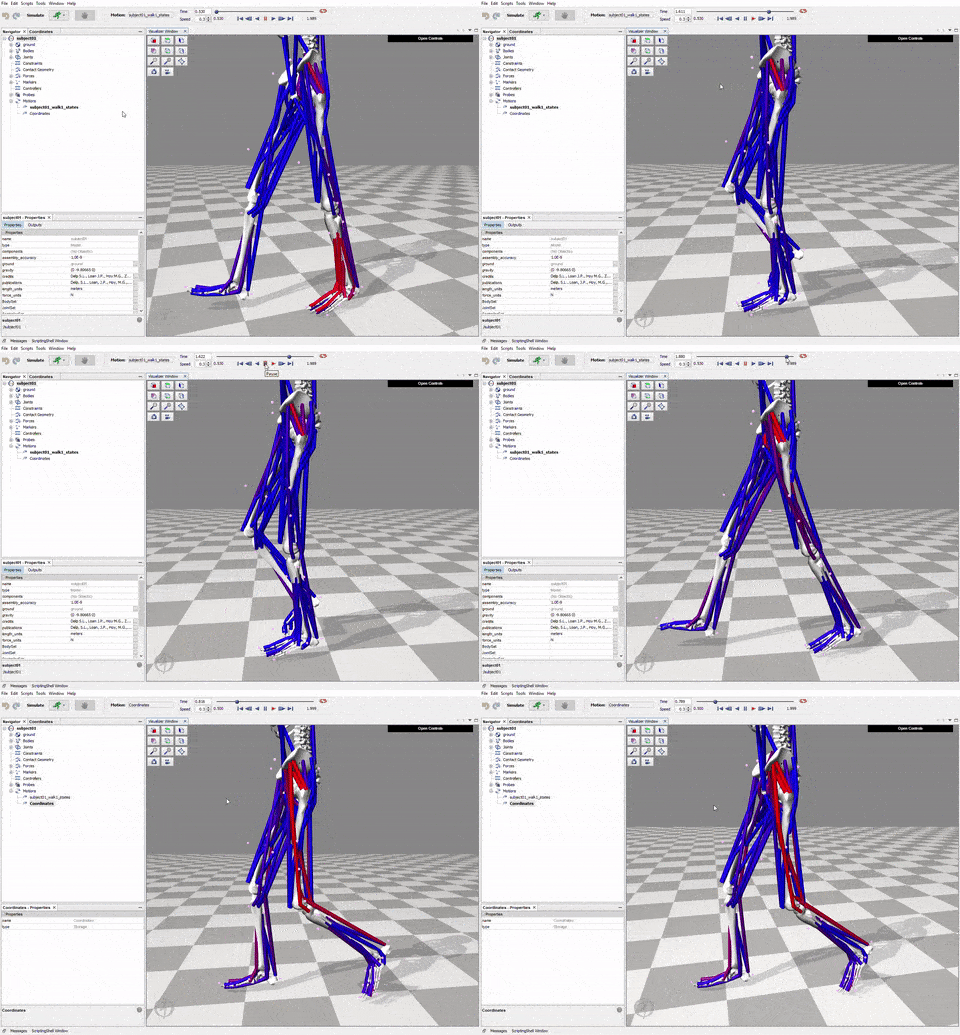
Unrealistic humanoid locomotion may occur when modeling human physical behavior. Ensuring that we can realistically model human physical behavior allows us to accelerate proper humanoid robot learning which can be used in high-risk environments. Using custom reference motion we aim to produce a deep reinforcement learning model which can perform a variety of tasks in various learning environments by utilizing high performance GPU-based physics simulation. Of particular focus is on precisely simulating the motions of the musculoskeletal system, as shown in the image above, within a rehabilitative setting. We aim to verify and improve the effectiveness of different rehabilitation methods on hand injuries via the usage of reinforcement learning.
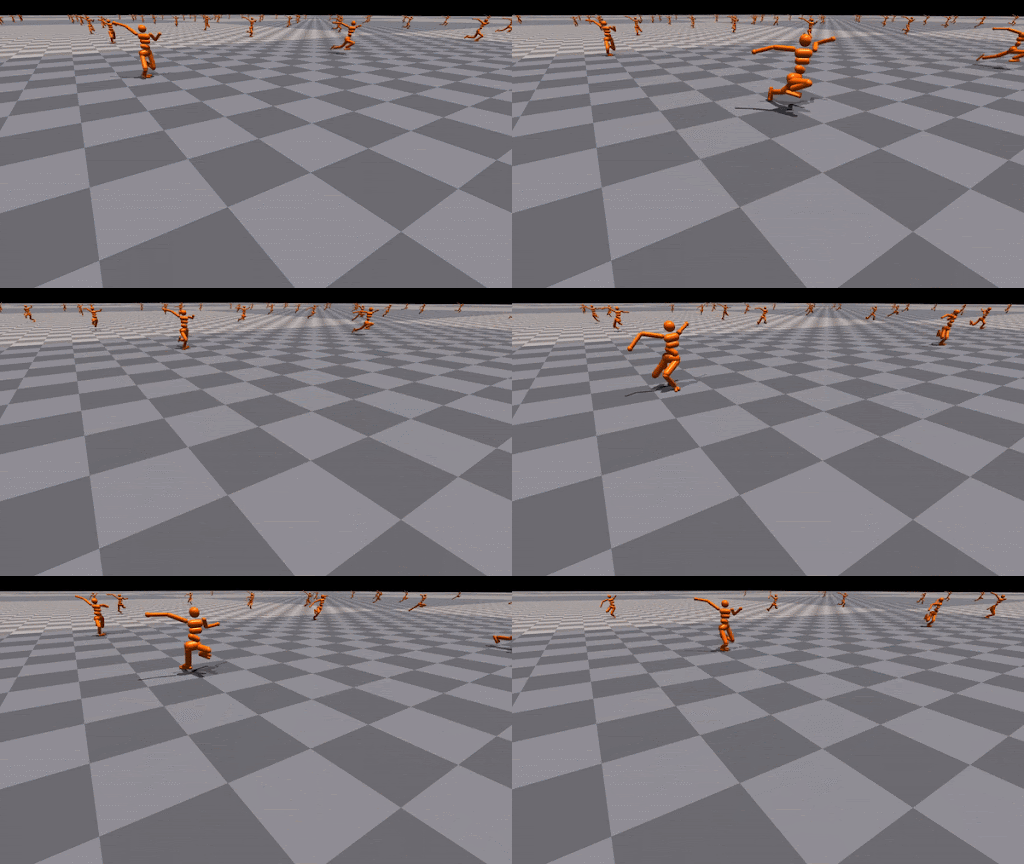
By using Isaac Gym, NVIDIA's physics simulation environment, we can accelerate the learning process by simultaneously training multiple humanoid robots to perform the same task, as shown in the image above.